
Whether it’s setting up your altar, reading tarot, or doing spell work the elements are taken into consideration with great care and knowledge. They are part of the rituals. Why should making a cocktail be any different? After all, the mixing of ingredients with an intention, even if only to be strong or taste good, can be looked at as spell casting. It’s one of my favorite ways to practice magic.
This is the last of this series of articles. We’ve discussed water, earth, and air. Now is my personal favorite of the elements: Fire. Fire is the start of civilization, the ability to cook our food, energy and warmth, but it can also be destructive and wild. In tarot the element of Fire is represented in the suit of Wands. The suit of Wands is connected to passion, goals, intentions, and creativity. You’ve heard me talk a lot of about intentions in relation to how to make a cocktail; that’s what gives the drink its magic.
Intention in the preparation of a cocktail is something that brings in all of the other elements. What kind of alcohol is being used? What type of ice will you need? What container is it being placed in when finished? These are all things to keep in mind when making a cocktail. The last step in that thought process is HOW are you preparing the drink? There are multiple different ways to prepare a cocktail. Is it a simple two-ingredient drink that you can pour over the proper ice in a rocks glass and serve? Do some of the ingredients need to be incorporated with shaking? Is the cocktail better served up and chilled in which stirring would be a better preparation? Are you confident in your bartending skills and are able to “throw” the drink like they do in Spain? Throwing means moving the liquid from one container with ice through a strainer to another container without ice.
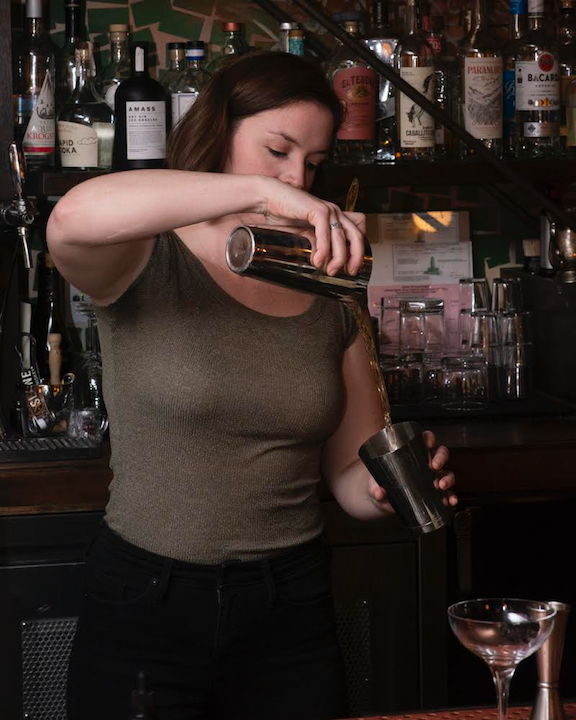
Me throwing my cocktail entry, “Gracious Intent,” during the 2020 Bacardi Legacy Competition 2020
Knowing the intention for the finished product will help you decide which of these preparation styles is best suited for the job. For example, Martini’s were mainly stirred prior to James Bond requesting his shaken. Bond famously ordered his martini (actually a Vesper, not a vodka martini) that way because the addition of aeration to the martini when shaken with ice becomes a little frothier. It has a lighter viscosity in the mouth feel than a stirred martini, although that is something you’d probably need to test side by side to understand what I mean. Throwing a martini is my favorite way to prepare and drink them; it’s somewhere in between shaking and stirring. There isn’t as much aeration as when shaken, but it does lighten the viscosity a skosh. There’s also a chance you wouldn’t taste the difference, which isn’t a bad thing. Not everyone is trained to notice the subtleties and it can actually be beneficial if you aren’t. Being overly critical of something does not make you better than another human that doesn’t have that knowledge.
There are some cocktails on the other hand that simply would not work without being shaken. Take one of the most famous shaken cocktails there is, the Ramos Gin Fizz. It needs so much aeration in the ingredients that it can be a bartender’s most dreaded drink to see on a busy night. Originally created in New Orleans, as a lot of great classic cocktails were, the ingredient list includes cream and egg white. The desired consistency is when the foam stands tall above the rim of the glass and is thick and meringue-like that the straw would balance on top. In 1888 if ordered in the bar where it originated, they would pass the shaker down a row of 12 or so waiting bartenders that would each shake it for 30 seconds. I’m sure it was quite the spectacle to behold. Please try to make one yourself at home before ordering while you’re out, that way you know the effort that is required and tip accordingly. The egg and the cream hints that these were usually seen as a morning drink. Quite a few classic cocktails started as “hangover cures” in fact. But that’s cocktail history for a whole other article.
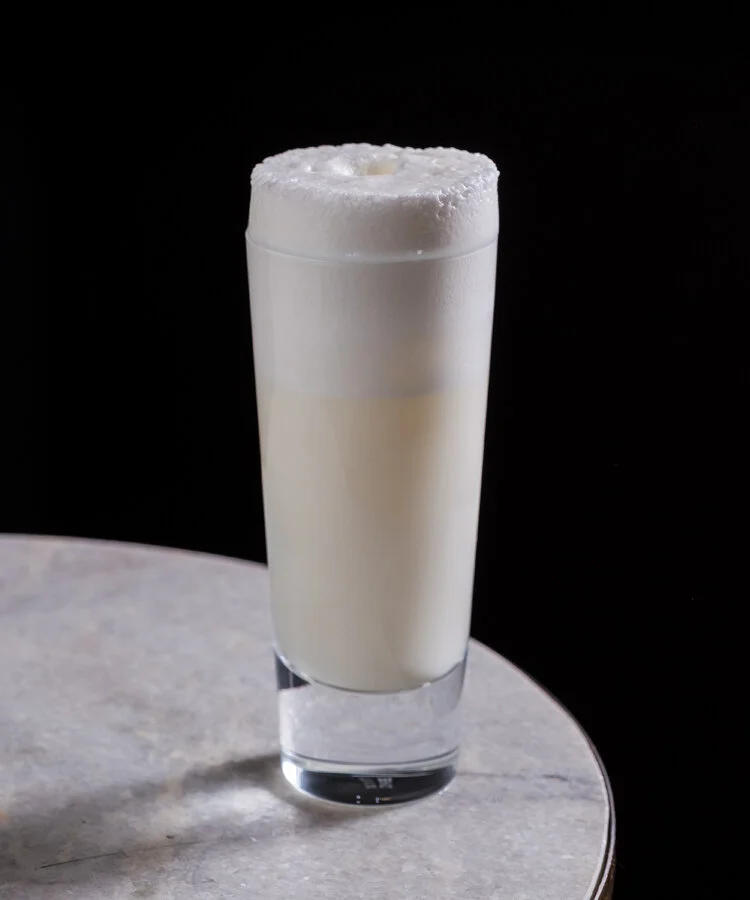
Original photo and cocktail recipe: https://vinepair.com/cocktail-recipe/the-ramos-gin-fizz-recipe/
The point is that air is a necessary ingredient in cocktails that include egg whites – or the vegan option of aquafaba – cream, creamed liqueurs, fruit juices or heavy syrups. The integration of ice is for dilution and combining ingredients, but ice can’t do its part without the air and the passion and energy of the person preparing the drink. That’s why in shaken cocktails you’ll see how a bartender tends to bring their shaker away from and closer to their body again and again. The cyclical movement forces the ingredients inside the shaker to hit and rebound over all parts of the tin and thus whipping the air into the cocktail as well. Let’s sidebar for a moment to talk about the bartender’s shake: that is something of their own personality and flair coming out to play. I had a boss once who swore if it was a busy enough night and you watched carefully… the way a bartender shook their drinks, their speed, and the direct concentration on a bartender’s face would resemble how they were in bed and ultimately their “O” face. Some bartenders start off slow and pick up speed, some have a specific rhythm they’re shaking to, some dance with their tins, and some just shake it fast and hard. Honestly, that concept is not far off from the truth. So next time you’re looking to possibly pick up the bartender, watch carefully before you decide. 😉
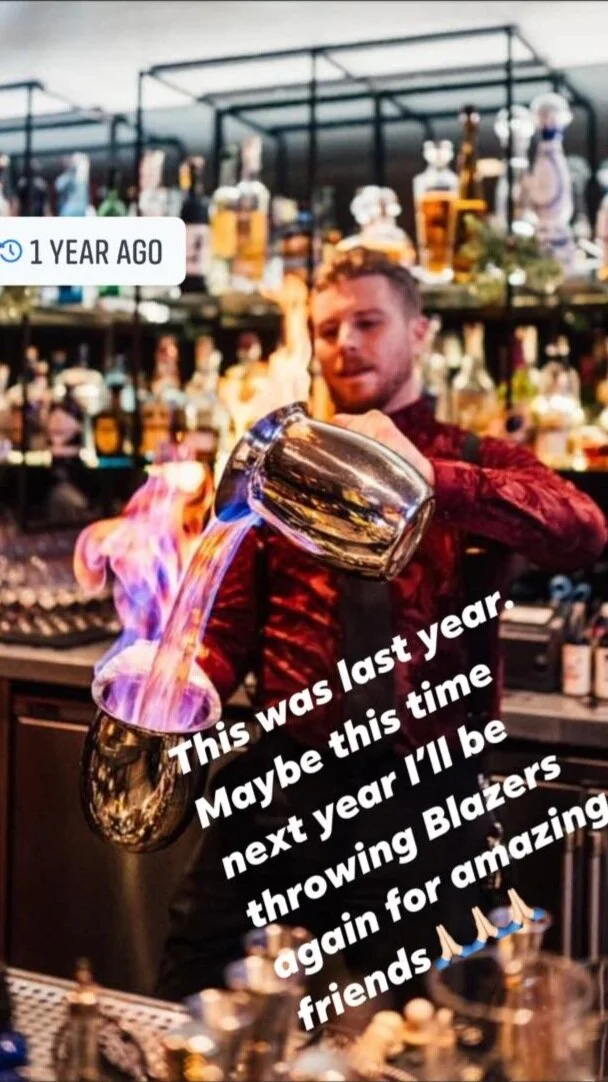
My friend Dorian throwing fire to make Blazers. (Not my photo)
Fire in cocktails can also be quite literal. Flaming Dr. Pepper, Blue Blazer, various Tiki drinks, are all things that require actual flames to make or serve the cocktail. I wouldn’t try these at home if you aren’t a professional. But IF you do, and I wouldn’t blame you for trying, at least have a fire extinguisher near by. Another way to incorporate fire in cocktails is with the smoke instead. This is typically an easier but still fancy preparation in some cocktail making. For example in the Yule Be Joyful cocktail, there’s a burning/smoking rosemary sprig as a garnish. The smoke acts both as a way to cleanse the space around you, and as an aromatic addition to your cocktail experience. Another great example of smoke in a cocktail would be to smoke your glass before pouring the liquid into it. So instead of the singed rosemary sprig on top, light the rosemary on a non-flammable surface like a plate, and cover the sprig with your glass. Make the cocktail while the glass is filling up with smoke. When you’re ready to strain the cocktail into the glass, turn it over and do so. There will be a bit of smoke that bellows out as you pour the liquid, but the aroma will still be in the glass. There are also many other ways to smoke a glass, including lots of expensive machinery, but the results are about the same.
Another way in which fire is quite literally involved in cocktail making is the distilling of alcohol, which we talked about previously with the earth element. In order to make alcohol you need to boil the mash in a still. Since water and alcohol have different boiling points, with the help of fire, alcohol vaporizes first and works its way up the still. Once up the edge of the still it works its way into a condensing pipe in which the vapor is cooled back to a liquid form. The shape of the still has an effect on the final product, but that’s a lot of science and chemistry that we don’t need to get into right now. The point is without fire, and also without witches – the first brewers – we would not have alcohol in its current form.
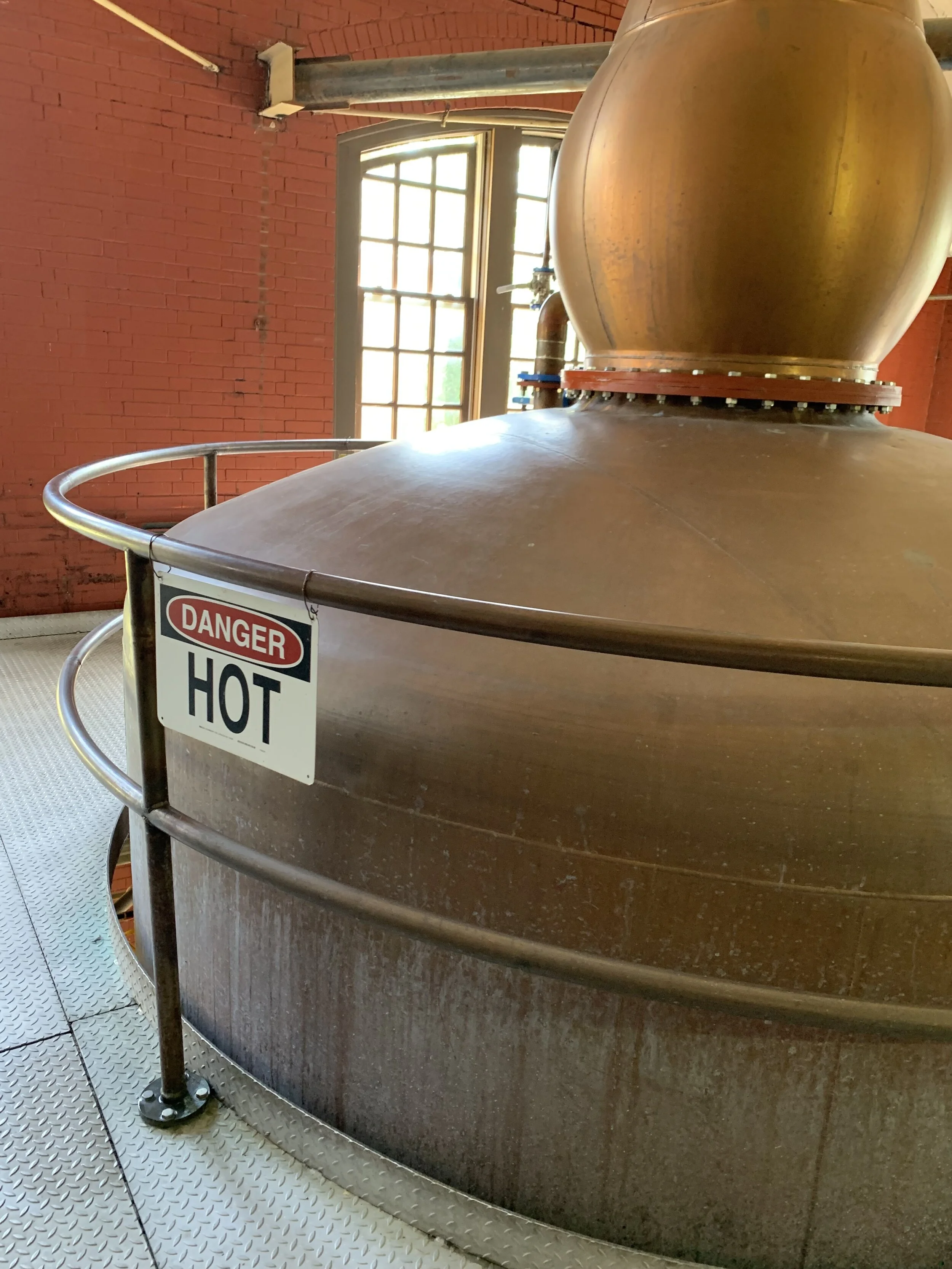
One of the stills at Four Roses Distillery in Kentucky.
Fire also plays a part in the aging of spirits. The making of barrels and casks require heating the wood in order to shape it. Typically the only things holding the shape of these containers together are several metal rings on the outside, meaning that the only thing the spirits inside interact with is the wood itself. The barrels in which the newly distilled spirit is placed is often toasted or charred as well. The degree in which the barrel is charred depends on the final product intention. There are natural chemicals in specific woods that when heated come to the surface and have a better interaction with the spirit inside. Wine and sherry casks are typically only toasted. Whisk(e)y barrels however often char their barrels, after they are formed, before putting on the last head piece (which is also charred separately).
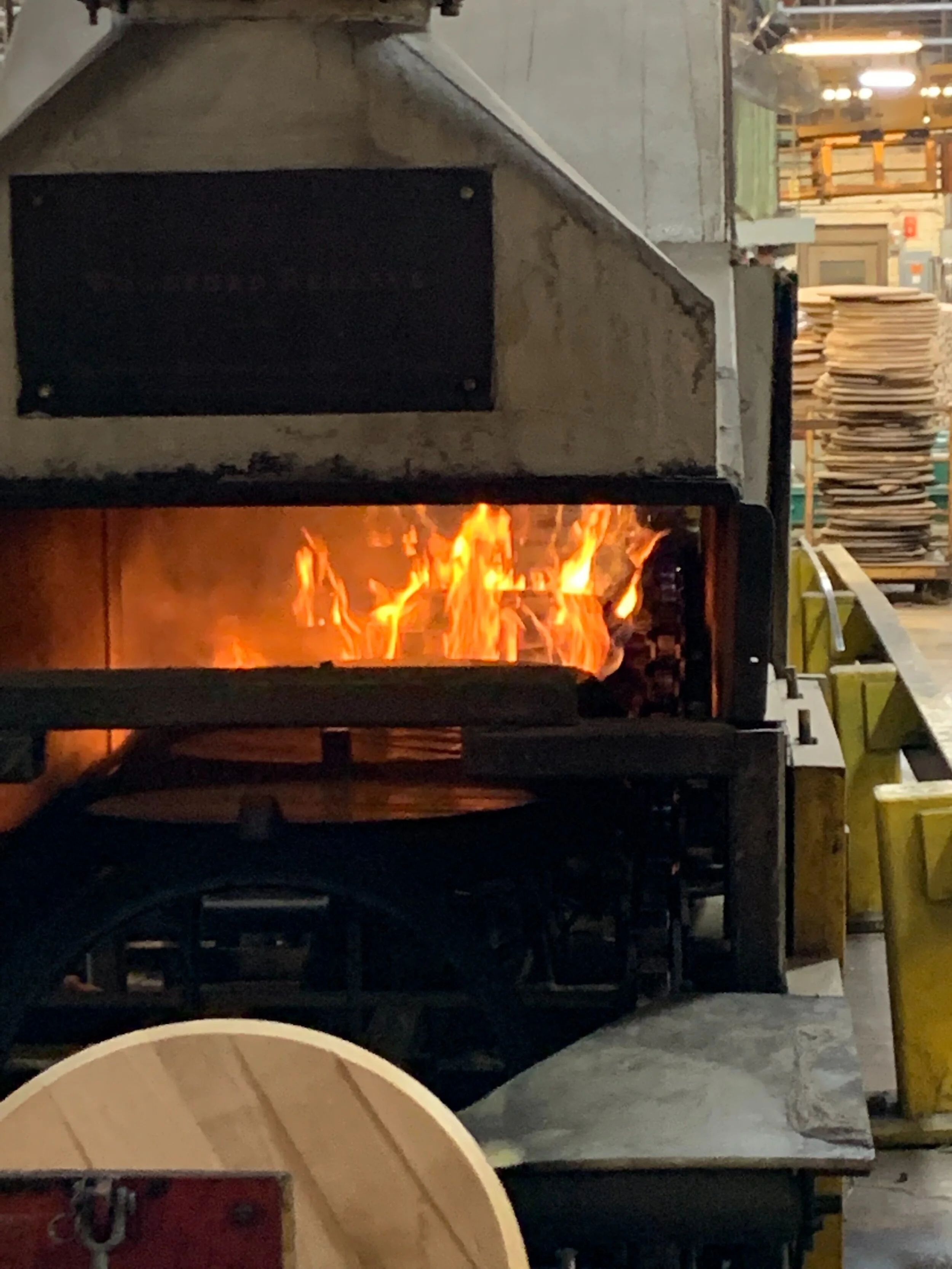
The barrel heads being charred.
The main reason to char the Oak barrels when aging American whiskey is to release lignin in wood. Lignin is the source of vanillin or vanilla flavoring. This also releases a variety of other flavors associated with your favorite whiskies including caramel, cinnamon, and fruit notes. The higher the char in the barrel the easier it is for the spirit inside to go into the wood and pull out all of those great flavors as it ages. The barrels and the spirit inside will expand and contract with the weather of the place its aging. That is why to get the same level of flavor and color in a Scotch takes so much longer that it does with American Whiskey. Scotland has a much more temperate climate, so the barrels are not expanding and contracting as much as they do in the southeast United States. The other great reason to char the inside of the barrel is to have a filtration system inside the barrel, in the form of the carbon that makes up the char, removing the unwanted flavors such as sulfur from the new spirit.
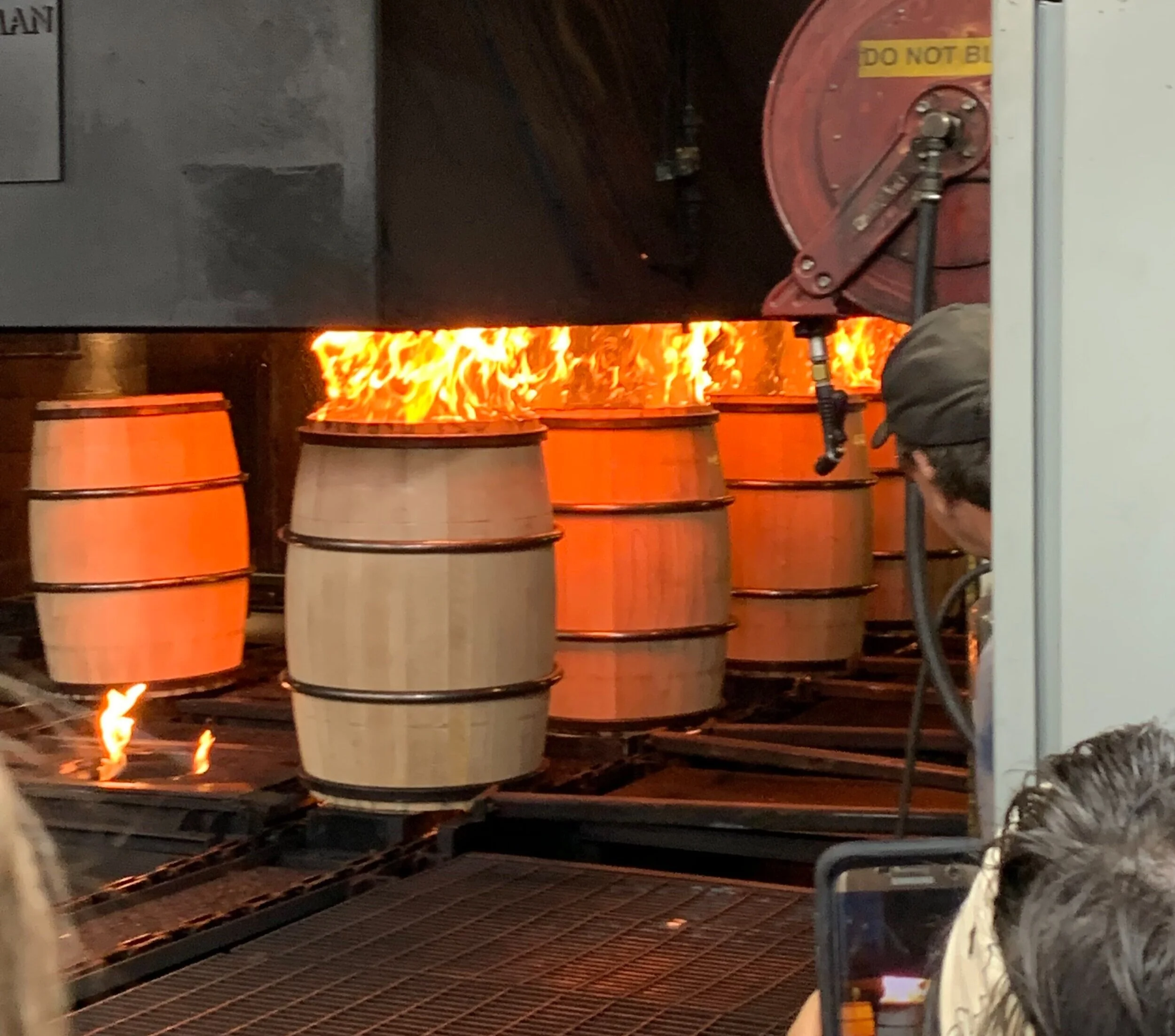
Charring barrels at one of the Brown Forman facilities.
With American whisk(e)y there are certain rules and regulations around how long the spirit needs to age and what kind of wood can be used for the barrel. For bourbon, only new charred oak barrels are allowed. There is also a rule that nothing can be added to the liquid, meaning no flavor or coloring. That is not true for other whisk(e)y production; color and flavor can be added after the fact. All of the color in bourbon comes from the char on the inside of the barrel and how long it has been maturing. Since that barrel can only be used once, when it is emptied of the liquid in it, it cannot be used again at that distillery. Don’t worry though. Bourbon barrels are sold around the world for a second market to other whisk(e)y makers in Scotland, Ireland, Japan, rum makers in the Caribbean, beer makers around the world, crafters, etc. They don’t typically go to waste.
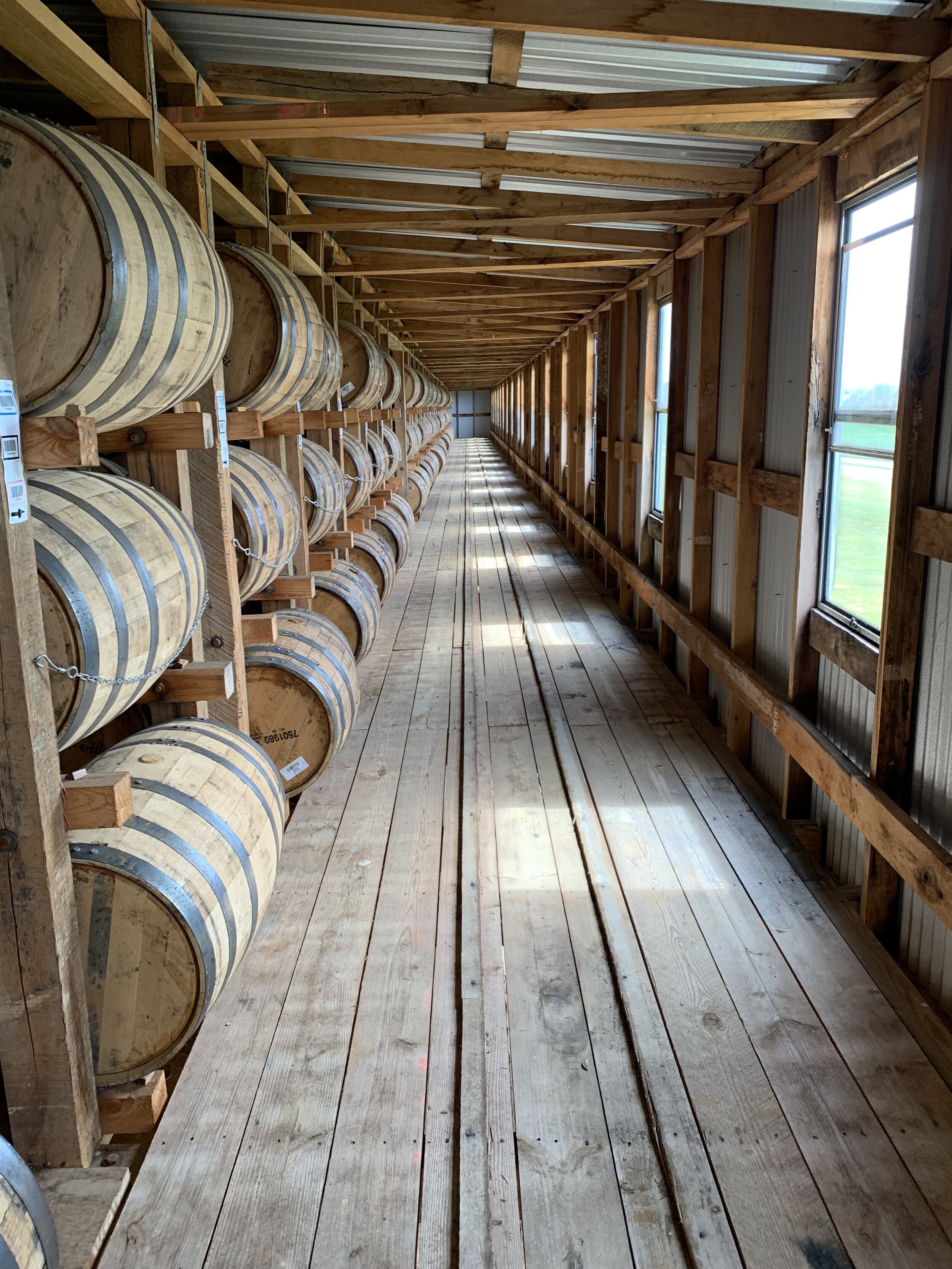
A barrelhouse in Kentucky.
The last thing I‘d like to say about fire in relation to cocktails is in relation to passion in presentation. We all know that you eat first with your eyes and the same is true for cocktails and drinks. Plating is important when you’ve made a delicious meal. You want it to look appetizing even before anyone tastes it. That concept is important to cocktails too. That’s why there is an importance around which glass it will go in and also what it is garnished with. Typically the garnish is just and additional reinforcement of an already included ingredient. A garnish can also be an aroma that ties the whole drink together, like the personal preference of a lemon zest or olives on a martini. The lemon zest for example, is used to express the oils over the martini, but then how is it displayed? Was the peel expressed and then meticulously cut to sit like a geometric shape balancing on the side of the glass? Or was it just chucked into the glass as an afterthought? The garnish is the last part in which the bartender can show their passion in a visually represented way.
Speaking of passion as it relates to cocktails and the people who make them for a living, I would be hard pressed to find a group of people that are more supportive and understanding as a collective. One doesn’t dedicate their lives to taking care of others in an industry often looked down on without some innate compassion and empathy. Now, I am not speaking for every human that has ever bartended, as I know it can be a stepping stone along their path to make whatever fast money they need in a short amount of time. I am however speaking of the people I know and/or watch in this industry that have reached out and helped their fellow bartender during this pandemic. I am referring to former bartenders that now work with brands and how they encouraged those brands to give back to the people that make their brands successful on bar shelves around the world. I am also speaking of organizations that put together educational seminars to keep bartenders working on their craft even if they weren’t able to be behind the stick. There were hospitality organizations that put together industry discussions about incredibly important topics including mental health support, as well as several non-profit groups that shed a light on undocumented workers in the hospitality industry who were not eligible for the same government support as their peers. If you’re curious about what the hospitality industry is doing please check out some of the following websites:
I am happy to be a part of the hospitality community. I hope this Alchemy of a Cocktail series was informative, inspiring or at least entertaining for you. If you want me to expand on anything I touched on in this series, please let me know and I can nerd out even more. Thanks for reading!